
Hydraulic valves
Directional, pressure and flow control valves; modular (CETOP) valves, lever operated valves, check valves and pilot operated check valves, counterbalance valves: all the components that manage the direction, pressure and flow of the oil.
Valves decide what a hydraulic machine does: they determine which way a cylinder moves, how fast and with how much force. In the hydraulic power units we manufacture, we design the valve block (manifold) ourselves to suit the circuit, select the valves, assemble the block and test it together with the unit. At our sister company Şahlan Makina we manufacture our own sectional directional control valve (Şahlan YKV). We ship directional, pressure and flow control valves from stock to every part of Türkiye and abroad, and also sell them through our online store (Turkish) at hidroticaret.com.
Types
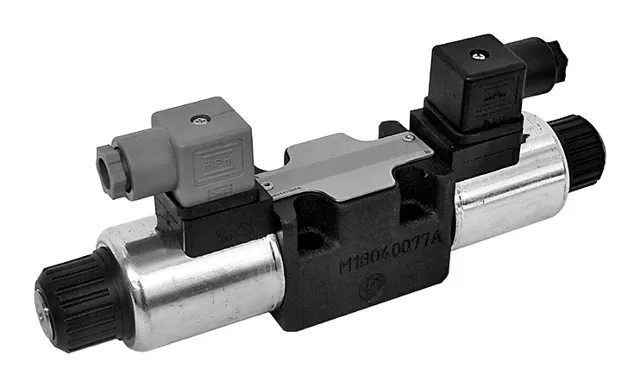
Solenoid directional control valves
They change the direction of the oil with an electrical signal: they extend and retract a cylinder and select the direction of rotation of a hydraulic motor. Used in automation and on PLC controlled machines.
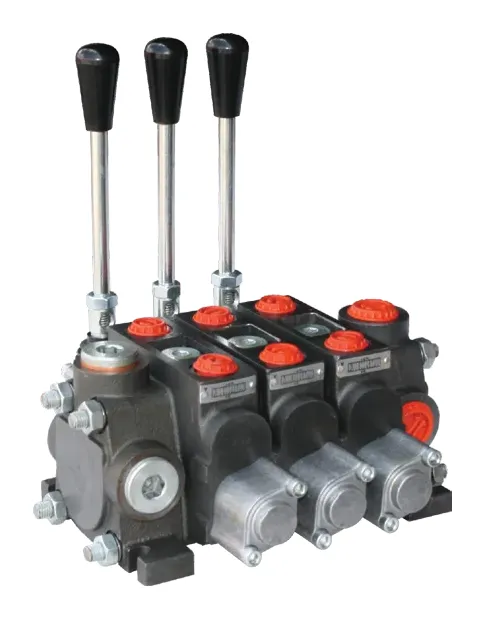
Lever operated directional control valves
Operated by hand. In monoblock or sectional construction they control several cylinders from a single body. Common on agricultural, construction and lifting machinery.
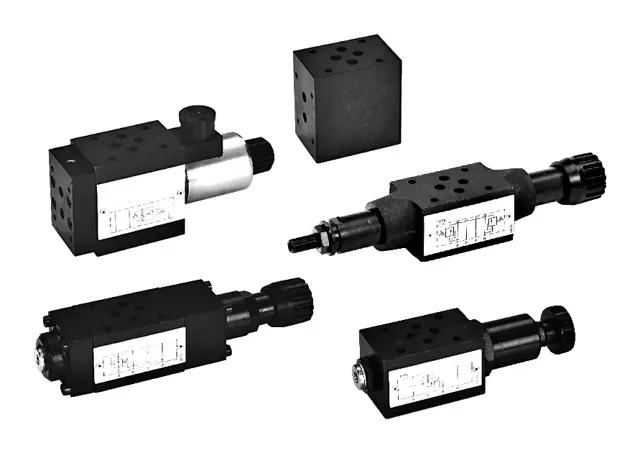
Modular (CETOP) valves
Valves with a standard mounting interface. Stacked under the directional valve, they combine pressure, flow and check functions in a compact block without pipework.
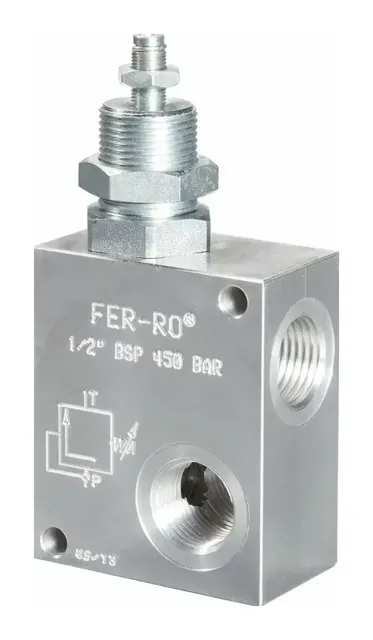
Pressure relief valves
They limit the maximum pressure in the circuit. At the set pressure they open the oil to tank and protect the pump, hoses and cylinder from overpressure.
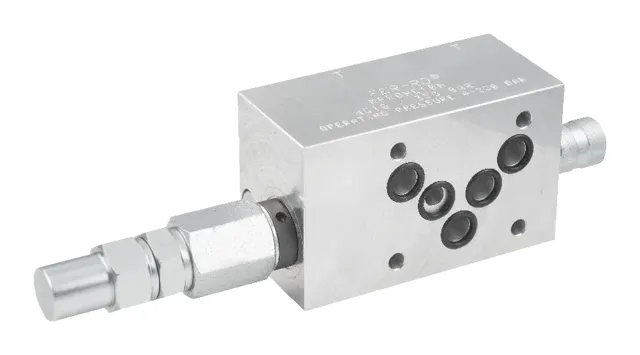
Pressure reducing and sequence valves
A pressure reducing valve runs one branch of the circuit at a lower pressure. A sequence valve starts the next movement once the previous one has reached a set pressure.
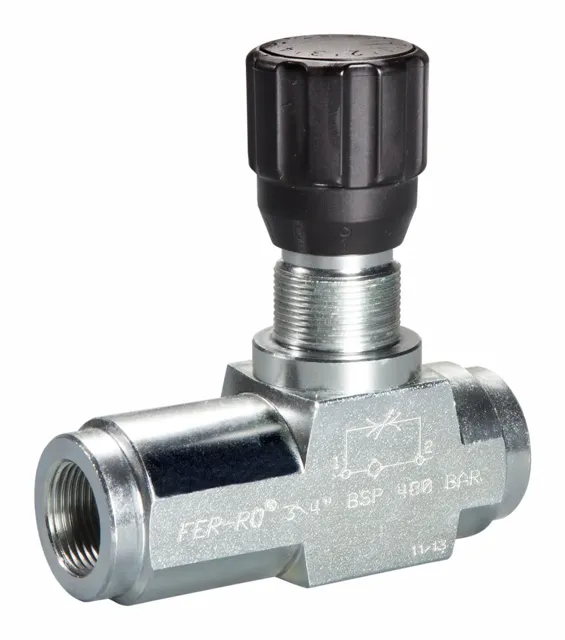
Flow control valves
They throttle the flow to set the speed of a cylinder or hydraulic motor. Pressure compensated types keep the speed constant even when the load changes.
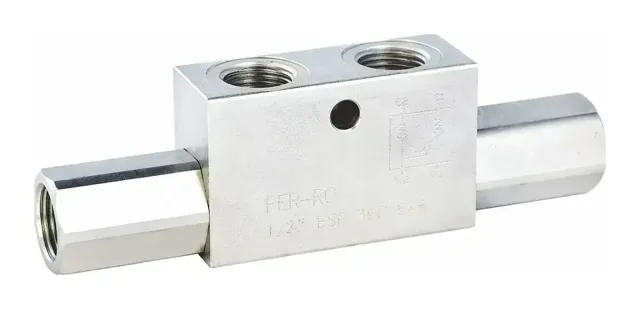
Check valves and pilot operated check valves
A check valve lets oil pass in one direction only. A pilot operated check valve (lock valve) locks the cylinder in position and stops the load from creeping under its own weight.
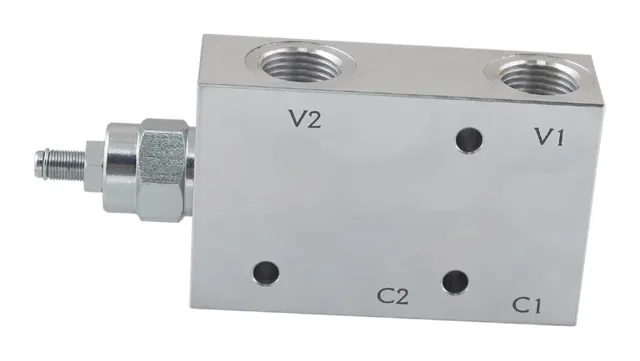
Counterbalance (load holding) valves
On a cylinder carrying a suspended load they keep lowering under control and stop the load from falling even if a hose bursts. A safety component in crane, platform and lifting applications.
Şahlan YKV sectional directional control valves
Manufactured by our sister company Şahlan Makina: a sectional type directional control valve with 1 to 8 sections and a flow rating of 160 L/min.
Product images: hidroticaret.com.
How to select
Valve selection starts with the pressure and flow the circuit needs. The nominal size (NG) of a valve determines the flow it can pass: pushing too much flow through a small valve means pressure drop and heat. Valves that do the same job also differ by mounting style: an inline valve is fitted directly into the pipework, a modular valve onto a standard subplate interface, and a cartridge valve into the manifold block.
Two choices stand out for a directional control valve. The first is the type of actuation: solenoid, hand lever, pilot or a combination of these. On a solenoid valve the coil voltage is chosen to match the supply voltage of the machine. The second is the center position: with a three position valve in the center, the cylinder can be locked, the pump can be unloaded to tank, or the cylinder can be left free. The table below shows these options.
Pressure and flow control are directly linked to safety. Every circuit should have a relief valve immediately at the pump outlet. On cylinders that carry and lift loads, the directional valve alone is not relied on: directional valves have internal leakage and the load creeps down slowly. A pilot operated check valve or a counterbalance valve is mounted directly on the cylinder so that the load stays in place even if a hose is damaged.
When replacing a faulty valve, the mounting interface, nominal size, symbol and coil voltage must all match. Sending us the nameplate or a photo of the valve is usually enough for us to find an equivalent. For discontinued valves we work out a counterpart that does the same job from the circuit diagram.
Center position options for a 4/3 directional valve
| Center position | What happens in the center position | Typical use |
|---|---|---|
| Closed center (all ports blocked) | The cylinder is locked in position; pump pressure rises to the relief valve setting | Circuits with an accumulator and circuits where several valves are fed from the same pump |
| Tandem center (P to T open, A and B blocked) | The cylinder holds position and the pump unloads to tank without pressure; less heat is generated | Simple circuits with one pump and one cylinder, and power units |
| Open center (all ports connected) | The pump unloads to tank and the cylinder is free | Applications where the hydraulic motor should be free to rotate |
| Float center (P blocked, A and B open to tank) | The cylinder and hydraulic motor can be moved by hand; the pump stays at pressure | Hydraulic motor drives, cylinder circuits with pilot operated check valves |
The notation is based on ISO 1219 symbols. In a circuit with a pilot operated check valve, A and B must be open to tank in the center position; otherwise the check valve does not close fully and the load can creep.
Nominal sizes of modular valves
| Nominal size | Mounting interface (ISO 4401) | CETOP equivalent | Typical maximum flow |
|---|---|---|---|
| NG6 | ISO 4401-03 | CETOP 3 | 80 L/min |
| NG10 | ISO 4401-05 | CETOP 5 | 150 L/min |
| NG16 | ISO 4401-07 | CETOP 7 | 300 L/min |
| NG25 | ISO 4401-08 | CETOP 8 | 600 L/min |
| NG32 | ISO 4401-10 | CETOP 10 | 1,100 L/min |
Valves with the same mounting interface are interchangeable regardless of brand. The flow values are typical for directional control valves; the actual value depends on the valve type and manufacturer, and selection is based on the manufacturer's flow versus pressure drop curve.
Frequently asked questions
Why does my hydraulic cylinder drift down under load?
Directional control valves have a small amount of internal leakage by design, so the load creeps down over time. On a cylinder that has to hold a load, a pilot operated check valve (lock valve) or a counterbalance valve should be mounted on the cylinder. The same symptom also appears if the cylinder's own piston seal is leaking.
What is the difference between a pilot operated check valve and a counterbalance valve?
A pilot operated check valve holds the cylinder but does not control lowering, so the weight of the load can speed up the descent. A counterbalance valve also controls lowering and prevents jerking. It is preferred on cranes and platforms that carry suspended loads.
Are NG6 and CETOP 3 the same thing?
Yes. Both refer to the ISO 4401-03 mounting interface. NG is the nominal size, and CETOP is the older European designation.
Is the solenoid coil faulty or the valve itself?
If the valve does not shift although voltage reaches the coil, the coil is measured first. If the coil is sound and the valve still does not work, the spool may be stuck because of dirt. In that case the cleanliness of the oil should be checked as well.
How much flow can a solenoid valve pass?
It depends on the nominal size and the type, and values differ between manufacturers for the same size. Just tell us the flow and pressure you need and we will select the right size.
Can you find an equivalent for the valve on my old machine?
Yes. Send us the nameplate, a photo or the symbol of the valve. We will suggest a counterpart from stock that matches the mounting interface, nominal size and coil voltage.
Do you also build valve blocks (manifolds)?
Yes. We select the valves from the circuit diagram, design the block, assemble it and test it. If required, we deliver it as a hydraulic power unit together with pump, motor and tank.
Are a relief valve and a pressure reducing valve the same thing?
No. A relief valve protects the whole system: when the set pressure is exceeded it discharges the excess oil to tank. A pressure reducing valve keeps one branch of the circuit at a lower pressure, independently of the rest of the system. One is a protection component, the other a setting component.
What do 4/2 and 4/3 valve mean?
The first number is the number of ports and the second is the number of positions. A 4/2 valve has four ports and two positions: it extends or retracts the cylinder. A 4/3 valve also has a center position; what the center position does is explained in the table above.
Stock, sizes and part numbers
Sizes in stock, manufacturer part numbers and brands are kept up to date in our catalog. Send us your requirement on WhatsApp or by e-mail and we will quote and ship worldwide.