
Electric motors
0.37-22 kW, 1500 rpm three-phase (380 V) and single-phase (220 V) induction motors and DC motors for power units; foot and flange mounted (B35) frame.
In a hydraulic power unit the electric motor is the first link in the chain, and an undersized motor trips its thermal overload however good the rest of the unit is. In the power units we manufacture, we size the motor from the pressure and flow the pump requires, match it with the pump adapter and coupling, and test it on the unit. We ship three-phase and single-phase motors from stock to every part of Türkiye and abroad, and also sell them through our online store (Turkish) at hidroticaret.com.
Types
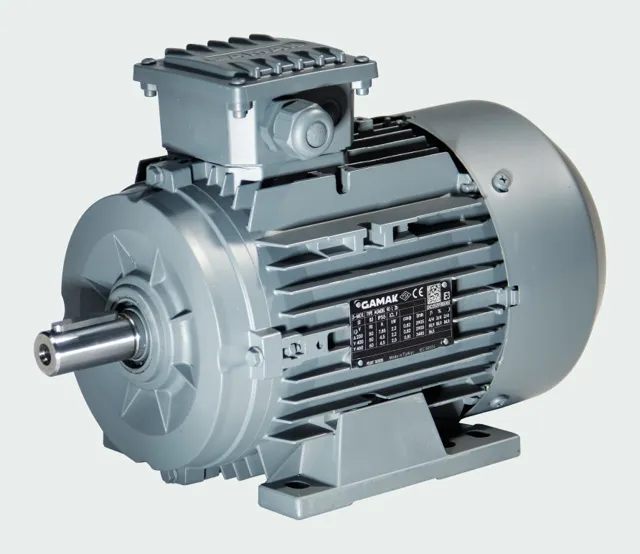
Three-phase induction motors
The standard motors in industry, running on a 380 V supply. Preferred for every power rating above 1.5 kW.
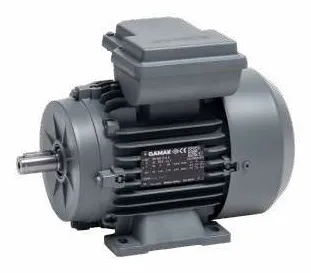
Single-phase induction motors
They run on a 220 V supply. Used in workshops without a three-phase supply and on small units. For the same power the frame is larger and the starting torque is lower.
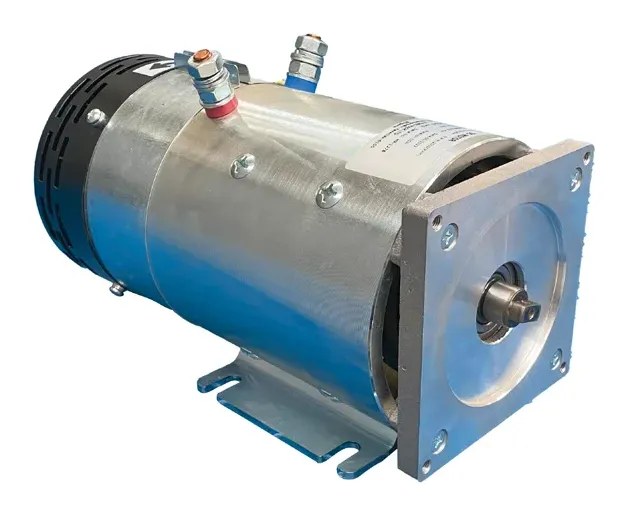
DC motors
Motors that run on a 12 or 24 V battery. Used on truck mounted power units, tippers and lifting platforms.
Product images: hidroticaret.com and manufacturers.
How to select
Motor power is found from the hydraulic power the pump requires: power is proportional to pressure multiplied by flow. The table below gives this calculation and the standard motor rating to select. If the motor is undersized, it struggles under load, draws excess current and trips the thermal overload. Choosing the next power rating up is the safe option.
Hydraulic power units almost always use a 1500 rpm (4 pole) motor. Pump flow is directly proportional to speed: a 3000 rpm motor gets twice the flow from the same pump, but the suction capability and service life of the pump may not allow it.
The mounting arrangement determines the installation. B35 is a frame with both feet and a flange: the motor sits on the chassis on its feet and is bolted to the pump adapter by its front flange. This is the standard on power units. There are also flange only B5 frames and small flange B14 frames. The IEC frame size determines the shaft and flange dimensions, and the adapter and coupling are selected to suit.
On high power motors, direct on line starting puts a strain on the supply, so a star-delta starter or a soft starter is used. We handle the control panel design of the unit together with the motor.
Required motor power by pressure and flow
| Flow | 100 bar | 160 bar | 200 bar |
|---|---|---|---|
| 5 L/min | 1.0 kW → 1.1 kW | 1.6 kW → 2.2 kW | 2.0 kW → 2.2 kW |
| 10 L/min | 2.0 kW → 2.2 kW | 3.1 kW → 4 kW | 3.9 kW → 4 kW |
| 20 L/min | 3.9 kW → 4 kW | 6.3 kW → 7.5 kW | 7.8 kW → 11 kW |
| 30 L/min | 5.9 kW → 7.5 kW | 9.4 kW → 11 kW | 11.8 kW → 15 kW |
| 40 L/min | 7.8 kW → 11 kW | 12.5 kW → 15 kW | 15.7 kW → 18.5 kW |
| 60 L/min | 11.8 kW → 15 kW | 18.8 kW → 22 kW | 23.5 kW → 30 kW |
Calculation: power = pressure × flow ÷ (600 × efficiency), with an overall efficiency of 0.85. The value to the right of the arrow is the next standard motor rating that covers the calculated power.
IEC frame size and power (4 pole, 1500 rpm)
| Frame size | Power |
|---|---|
| 71 | 0.37 kW |
| 80 | 0.55 - 0.75 kW |
| 90S | 1.1 kW |
| 90L | 1.5 kW |
| 100L | 2.2 - 3 kW |
| 112M | 4 kW |
| 132S | 5.5 kW |
| 132M | 7.5 kW |
| 160M | 11 kW |
| 160L | 15 kW |
| 180M | 18.5 kW |
| 180L | 22 kW |
The frame size is the shaft center height (mm). Motors in the same frame have the same shaft and flange dimensions, and the pump adapter and coupling are selected to these dimensions.
Frequently asked questions
What size motor (kW) do I need for a hydraulic pump?
It is calculated from pressure and flow: a system that needs 20 L/min at 100 bar requires about 3.9 kW, so a 4 kW motor is selected. The values in the table give this calculation.
Why are 1500 rpm motors always used?
The great majority of pumps give their best suction and service life at this speed, and pump flow ratings are also quoted at this speed.
What does B35 mean on an electric motor?
A frame with both feet and a flange. The motor sits on the chassis on its feet and is connected to the pump adapter by its flange. It is the standard mounting on power units.
220 V single-phase or 380 V three-phase?
If a three-phase supply is available, a three-phase motor is preferred: it has a smaller frame, is more efficient and has a higher starting torque. A single-phase motor is used only where there is no three-phase supply and for low power ratings.
Why does the motor keep tripping its thermal overload?
The motor may be too small for the system, the relief valve may be set higher than necessary, or the pump may be overloaded. Low voltage and a missing phase also trip the thermal overload.
Do you match the motor with the pump?
Yes. We select the pump, motor, adapter and coupling together. On request we build them into a hydraulic power unit with tank, valve block and control panel, test it and deliver it.
Stock, sizes and part numbers
Sizes in stock, manufacturer part numbers and brands are kept up to date in our catalog. Send us your requirement on WhatsApp or by e-mail and we will quote and ship worldwide.