
Hydraulic motors
Orbital (gerotor) hydraulic motors, piston motors and gear motors: components that turn pressure into continuous rotation and provide a drive without a gearbox.
The simplest way to drive a slow turning shaft that needs high torque is often a hydraulic motor: a single component replaces the electric motor and gearbox. For mixers, conveyors, winches and agricultural machinery we select the hydraulic motor from a speed and torque calculation, and build the circuit with the pump and valve that will drive it.
Types
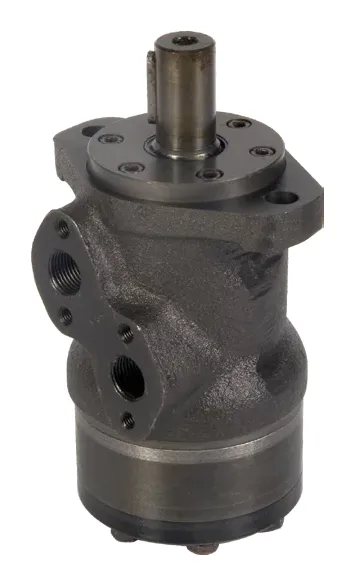
Orbital (gerotor) hydraulic motors
The inner gear rotor moves eccentrically inside the outer ring and delivers high torque at low speed. The most common type for gearless drives in conveyors, mixers, sweeper brushes and agricultural machinery.
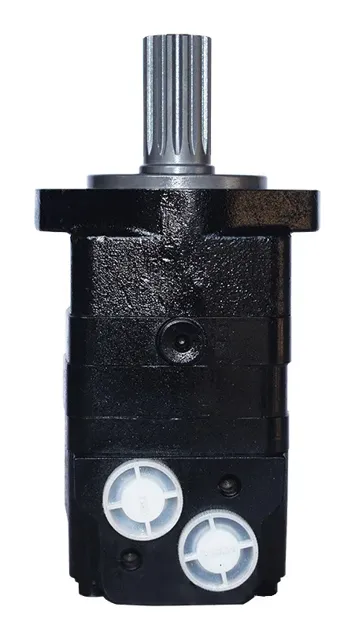
Heavy duty orbital motors
A larger bearing and shaft design carries axial and radial loads. Used for wheel drives and winch drum drives.
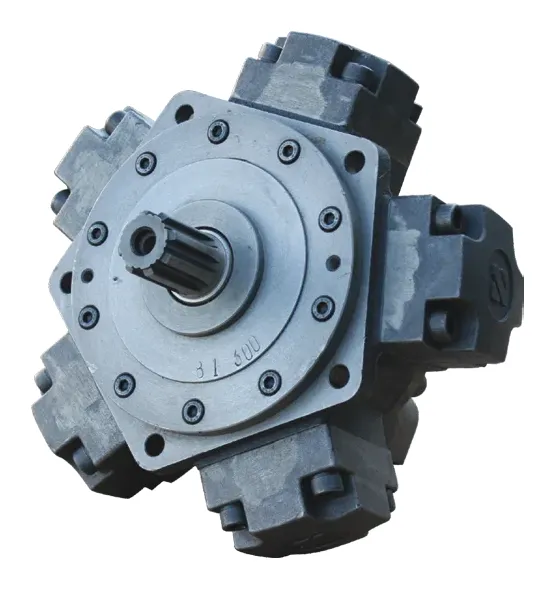
Piston hydraulic motors
Radial and axial piston types. Used in heavy duty applications that need very high torque, or high speed and efficiency.
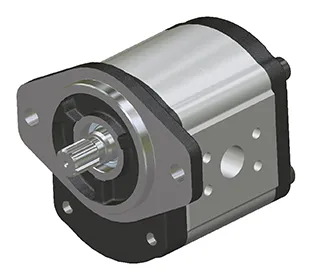
Gear motors
The motor counterpart of the gear pump. Used in high speed, low torque drives such as fans and small conveyors.
Product images: hidroticaret.com and manufacturers.
How to select
Selection starts with displacement: the volume of oil the motor takes in per revolution. With the same flow, a small displacement motor turns fast with low torque, and a large displacement motor turns slowly with high torque. Speed is found from flow and torque from pressure. The table below gives calculated values for the motor series we hold in stock.
The second deciding factor is the shaft and mounting geometry: a parallel, splined or keyed shaft, the flange type and the bolt hole dimensions determine whether the motor fits the machine. For a replacement, these dimensions are needed as well as the displacement.
The return line needs attention in the circuit. When a motor is stopped under load, it keeps turning through inertia. If the return line is closed, the motor cavitates internally or a pressure spike occurs. For drives that hold a load, a brake or a load holding valve is selected, and for rotation in both directions a suitable directional control valve.
The higher torque of a larger displacement motor does not mean more power: the power taken from the motor does not change, only its split between speed and torque. With a 40 L/min pump, as in the table, using a 400 cm³/rev motor instead of a 200 cm³/rev one drops the speed from 200 to 100 rpm and, at a 150 bar pressure difference, raises the torque from about 477 to 955 Nm. If more power is needed, flow or pressure is increased, not displacement. Because of efficiency losses, taking about 90% of the torque and speed in the table gives a result closer to reality in practice; in orbital motors running at low speed the share of losses increases.
The most common mistake in selection is reversing the order: picking a motor first and then looking for a pump. The right way starts from the job: the torque and speed it needs are known, the displacement is calculated from them, and the required flow and pressure are written as requirements for the pump and the circuit.
Speed and torque of orbital hydraulic motors
| Displacement | Speed at 40 L/min | Torque at 150 bar |
|---|---|---|
| 36 cm³/rev | 1,111 rpm | 86 Nm |
| 50 cm³/rev | 800 rpm | 119 Nm |
| 80 cm³/rev | 500 rpm | 191 Nm |
| 100 cm³/rev | 400 rpm | 239 Nm |
| 160 cm³/rev | 250 rpm | 382 Nm |
| 200 cm³/rev | 200 rpm | 477 Nm |
| 250 cm³/rev | 160 rpm | 597 Nm |
| 395 cm³/rev | 101 rpm | 943 Nm |
Calculation: speed = flow × 1000 ÷ displacement; torque = pressure × displacement ÷ 20π. These are theoretical values; motor efficiency reduces the actual speed and torque slightly. The displacements are taken from the orbital motor series we hold in stock.
Frequently asked questions
How do I calculate hydraulic motor speed?
Speed is flow divided by displacement: with a flow of 40 L/min, a 100 cm³/rev motor turns at about 400 rpm.
Hydraulic motor or geared electric motor?
A hydraulic motor has the advantage if the machine already has hydraulics, if space is tight, if the load is subject to shocks or if the speed needs stepless adjustment. For a single fixed speed drive on a machine without hydraulics, a geared motor can be more economical.
Can a hydraulic motor run in both directions?
Yes. Orbital motors turn in both directions. The direction depends on which port the oil is supplied to and is selected with a directional control valve.
My hydraulic motor has slowed down and lost power. What is the cause?
The internal leakage of the motor may have increased, but the same symptom can also come from pump wear or a leak in a valve. We find the cause by measuring the flow and pressure in the circuit.
Do you also build the circuit that drives the motor?
Yes. We select the hydraulic motor together with the pump and the directional and flow control valves that drive it. If required, we manufacture it as a hydraulic power unit.
Which pressure is used in the torque calculation?
Not system pressure, but the difference between the motor inlet and outlet. If there is back pressure in the return line, the effective difference shrinks and torque falls below what was expected; in a system with a blocked return filter this is often why the motor feels weak.
Must the drain line go to the tank?
On types with a drain port, yes, and the line must run directly to the tank without restriction. If back pressure builds in the drain line, the shaft seal has to carry it and starts to leak. Connecting the drain into the return line means the return pressure lands on the seal.
Stock, sizes and part numbers
Sizes in stock, manufacturer part numbers and brands are kept up to date in our catalog. Send us your requirement on WhatsApp or by e-mail and we will quote and ship worldwide.