
Hydraulic filters
Suction, return line and pressure line filters, tank top filters, replacement filter elements, tank breather filters and clogging indicators.
Most hydraulic failures start with contaminated oil, and although the filter is one of the cheapest parts in the system, it prevents the most expensive damage. In the hydraulic power units we manufacture, we select the filter to suit the sensitivity of the circuit. In service and predictive maintenance we measure the contamination level of the oil and plan filter changes before a failure occurs. We ship suction and return filters with their replacement elements from stock to every part of Türkiye and abroad, and also sell them through our online store (Turkish) at hidroticaret.com.
Types
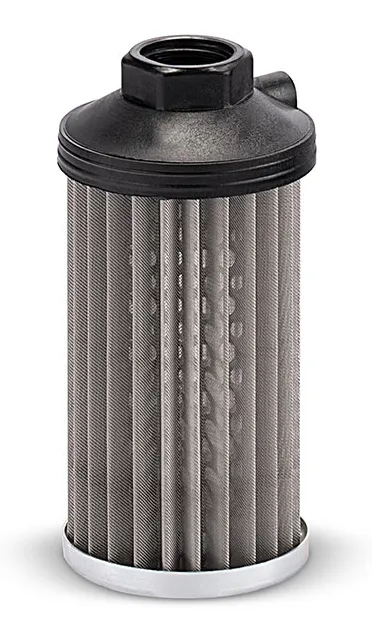
Suction filters (suction strainers)
A coarse filter at the pump inlet, working immersed in the tank. It protects the pump from large particles. Its flow rating must not be lower than the pump flow.
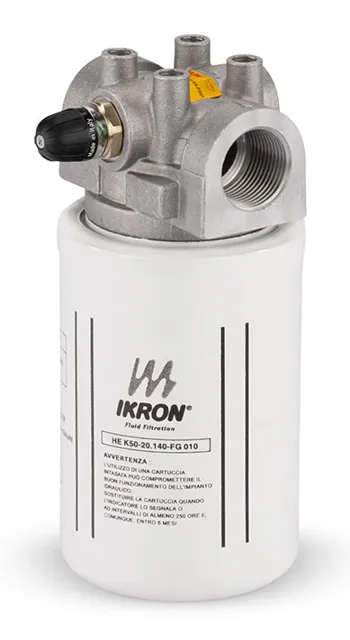
Inline return filters
They filter all of the oil returning to tank and do the main cleaning work in the system. Connected into the return line with pipework.
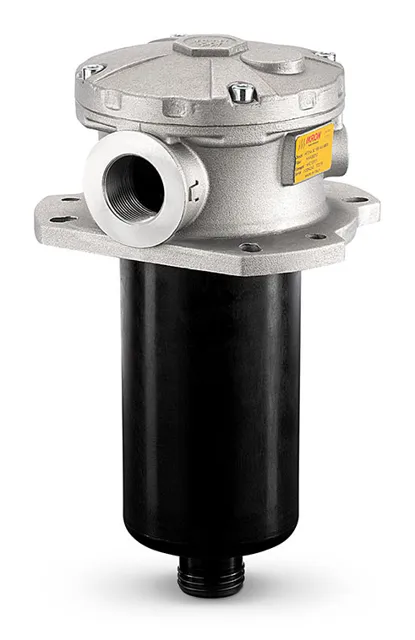
Tank top return filters
A return filter that sits on the tank cover. The element is changed from above, without draining the tank.
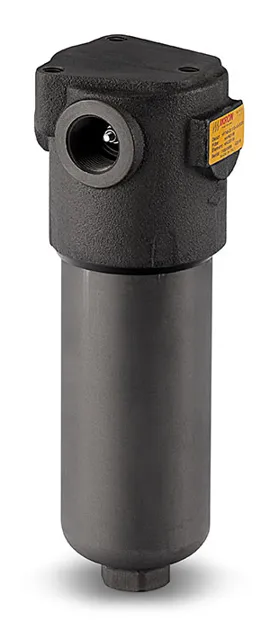
Pressure line filters
Used after the pump, upstream of a sensitive valve or a servo valve. The housing withstands full system pressure and the filtration is the finest.
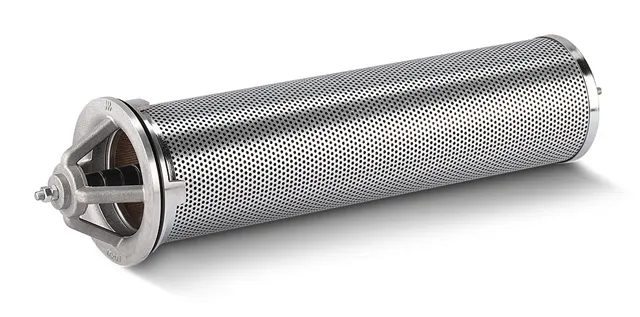
Replacement filter elements
The part that is changed during periodic maintenance. The housing stays in place and only the element is replaced.
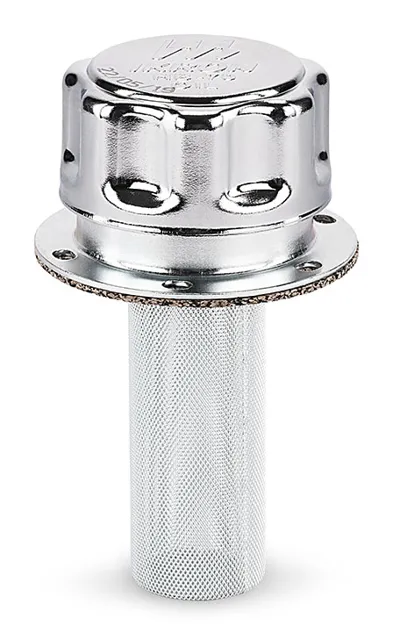
Tank breather filters
The breather and filler filter on the tank cover. It traps the dust in the air that enters the tank as the oil level changes.
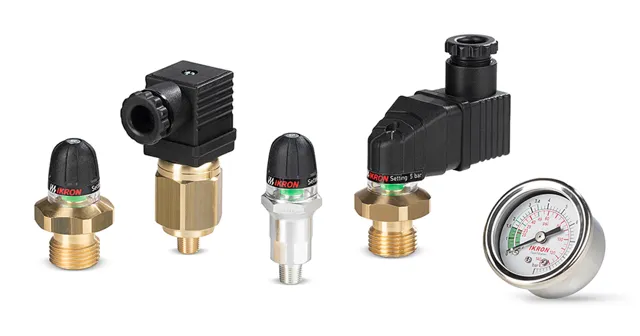
Clogging indicators
A component that detects from the differential pressure that the filter element is full, and shows it visually or gives an electrical signal. It takes the guesswork out of when to change the element.
Product images: hidroticaret.com and manufacturers.
How to select
Filters are found in three places in a circuit and each has a different job. The suction filter protects the pump, but it has to be coarse: a fine suction filter creates a vacuum at the pump inlet and drives the pump into cavitation. The main cleaning is done by the return filter, and a pressure line filter is used upstream of sensitive valves.
Selection has two axes: flow and micron rating. The flow rating of the filter must not be lower than the flow in the line. On the return line it also has to be taken into account that, because of the area ratio of the cylinder, the returning flow can be higher than the pump flow. Filtration fineness is given in microns: a finer filter gives cleaner oil, but it fills up sooner and causes more pressure drop.
Oil cleanliness is measured with the ISO 4406 cleanliness code. The table below gives the particle counts that correspond to the code numbers. Systems with servo and proportional valves need much cleaner oil than a simple unit with a gear pump. In predictive maintenance the code of an oil sample is monitored and the filter is changed according to that code.
The life of a filter element is determined by contamination, not by the calendar. On a filter with a clogging indicator, the change interval is read from the indicator. On a filter without one, the operating hours recommended by the manufacturer and the first change after commissioning should not be skipped.
ISO 4406 cleanliness codes
| Code number | Particle count (per 1 mL of oil) |
|---|---|
| 13 | 40 - 80 |
| 14 | 80 - 160 |
| 15 | 160 - 320 |
| 16 | 320 - 640 |
| 17 | 640 - 1,300 |
| 18 | 1,300 - 2,500 |
| 19 | 2,500 - 5,000 |
| 20 | 5,000 - 10,000 |
| 21 | 10,000 - 20,000 |
Contamination is written as three numbers: the codes for particles larger than 4, 6 and 14 microns (for example 18/16/13). Each code number means roughly twice as many particles as the one before it, so an improvement of one step in the code halves the contamination.
Filter location in the circuit
| Location | Function | Typical micron rating |
|---|---|---|
| Suction line | Protects the pump from large particles | 100-125 µm |
| Return line | Cleans all of the oil circulating in the system | 10-25 µm |
| Pressure line | Directly protects the sensitive valve | 3-10 µm |
The values are typical; sensitive valves and servo systems need finer filtration. Selection is based on the cleanliness class required by the valve manufacturer.
Frequently asked questions
Which is more important: the suction filter or the return filter?
They do different jobs. The suction filter protects the pump from large particles, and the return filter does the main cleaning. In a system without a return filter, the oil circulates dirty all the time.
How do I size a hydraulic filter for flow?
By the actual flow through the filter. On the return line, the flow coming back while the cylinder retracts can be higher than the pump flow. The filter is sized for this peak flow.
What does the micron rating of a filter mean?
It is the particle size the filter can retain. A 10 micron filter filters more finely than a 25 micron one, but it fills up sooner and causes more pressure drop.
How often should a hydraulic filter be changed?
It depends on contamination. If there is a clogging indicator, it is read from that. If not, the operating hours recommended by the manufacturer are followed. On a new system the first change should be made early because of assembly dirt.
My pump is making a growling noise. Could it be the filter?
Yes. A clogged or too fine suction filter creates a vacuum at the pump inlet and drives the pump into cavitation. A growling noise is the most common symptom of this.
Should I buy a complete filter or only the element?
If the housing is sound, the element alone is enough. Send us the old element or its part number and we will suggest an equivalent from stock.
Do you measure the contamination level of the oil?
As part of predictive maintenance we take an oil sample, assess its contamination level and plan filter and oil changes accordingly.
Stock, sizes and part numbers
Sizes in stock, manufacturer part numbers and brands are kept up to date in our catalog. Send us your requirement on WhatsApp or by e-mail and we will quote and ship worldwide.