
Rod seals
U-cups, compact rod seals, buffer seals and packings: the elements that seal the rod side of hydraulic and pneumatic cylinders.
The rod side is where a cylinder most often leaks oil. As an authorized Kastaş dealer we supply rod seals from stock, and we use the same seals in our own cylinder manufacturing and repair work. Bringing in the old seal or sending the groove dimensions is enough for us to identify the profile and size.
Types
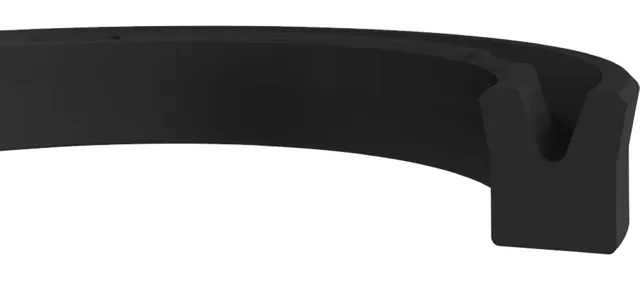
U-cup (U-seal)
Single-acting lip seal for the rod; the most common primary seal in hydraulic cylinders.
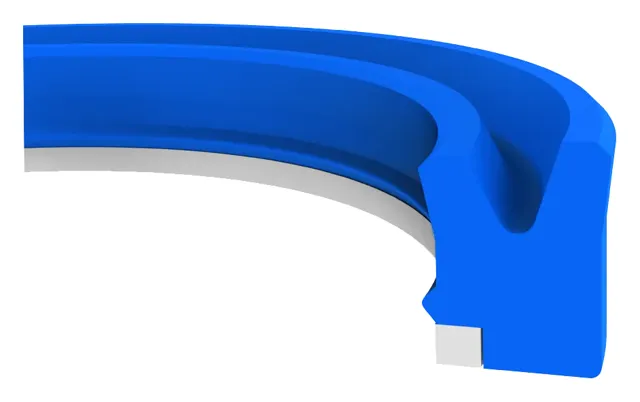
Compact rod seals
One piece with an integrated back-up ring; prevents the seal from extruding into the gap at high pressure.
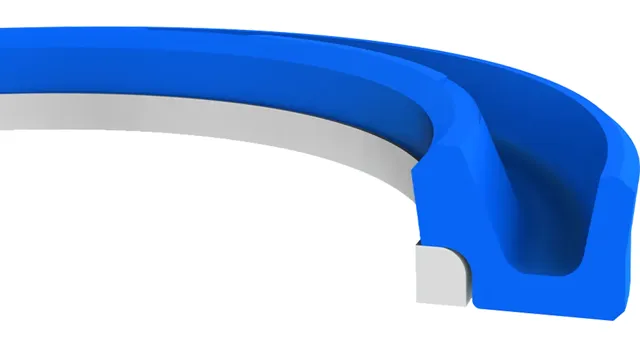
Buffer seals
Fitted ahead of the primary seal to absorb pressure peaks and extend seal life; used in heavy-duty cylinders.
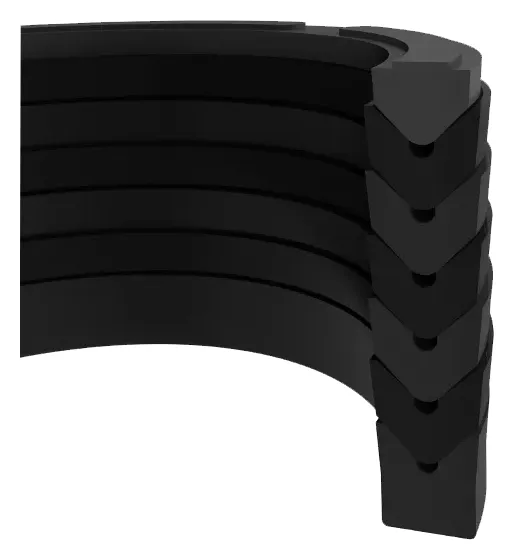
Rod seal packings
V-packings made up of several rings; for older designs and large-diameter cylinders, with adjustable tightness.
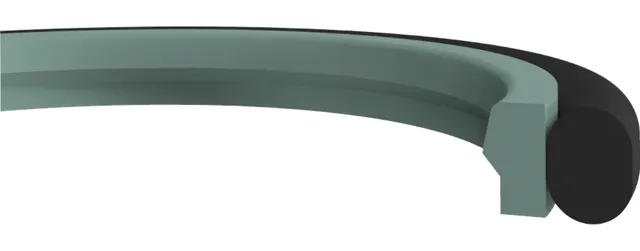
PTFE slide seals
Low friction and movement without stick-slip; for precision and servo cylinders.
Product images: Kastaş.
How to select
The rod side is sealed by a system, not by a single seal: from the inside outwards a buffer seal, the primary seal (U-cup) and a wiper, with a guide ring between them carrying the load of the rod. If one part of this system is missing or wrongly selected, even the best seal will start leaking in a short time. In cylinder manufacturing we build this system according to load, pressure and environment.
The size of a rod seal starts from the rod diameter: rod diameter × groove outer diameter × groove height. The profile is selected according to pressure and speed; at high pressure, profiles with a back-up ring or a harder material are needed to stop the seal from extruding into the gap between the rod and the cylinder head. For material, NBR is preferred for general purposes, polyurethane for wear and high pressure, and FKM for high temperature.
A seal does not work alone; it works against the rod surface. A rod with scratches, impact marks or flaked plating will cut a new seal in a short time, so the rod surface must be smooth and hard chrome plated. For this reason, on a cylinder that comes in for repair we measure the rod before replacing the seal and, if necessary, cut and machine a new chrome plated rod.
Seal materials and approximate operating temperatures
| Material | Abbreviation | Approximate temperature range | Where it is used |
|---|---|---|---|
| Nitrile rubber | NBR | -30 … +100 °C | Mineral oil and grease; general-purpose standard |
| Polyurethane | PU (AU) | -30 … +100 °C | Wear and high pressure; hydraulic rod and piston seals |
| Fluoroelastomer (Viton) | FKM | -20 … +200 °C | High temperature and chemicals |
| Hydrogenated nitrile | HNBR | -30 … +150 °C | Oil at high temperature; mobile hydraulics |
| Ethylene propylene | EPDM | -45 … +150 °C | Water, steam, brake fluid; NOT SUITABLE for mineral oil |
| Silicone | VMQ | -60 … +200 °C | Food contact and wide temperature range; low wear resistance |
| PTFE (bronze or carbon filled) | PTFE | -100 … +200 °C | Low friction; guide rings and slide seals |
The values are the typical range of the material family; the exact limit depends on the profile, the fluid and the manufacturer. The material is always evaluated together with the fluid.
Frequently asked questions
Why does a rod seal leak?
The most common causes are a scratched or corroded rod surface, the wrong profile or material, pressure peaks, and dirt entering because the wiper is not doing its job. If these causes are not checked before the seal is replaced, the new seal will also leak in a short time.
How do I read a rod seal size?
It is read as rod diameter × groove outer diameter × groove height. In the Kastaş code the profile is written with a letter and the size with numbers: K21-040/11 is a K21 U-cup measuring 40 × 50 × 8 mm.
Should I choose a U-cup or a compact rod seal?
A U-cup is sufficient for medium pressure and general applications. For high pressure, a large extrusion gap or shock loads, a compact seal with a back-up ring and a buffer seal ahead of it is preferred.
Can you identify the size from an old seal?
Yes. Sending the old seal or the groove dimensions is enough; we identify the profile and size and supply the equivalent from stock or from the Kastaş catalog.
Do you replace the seals in my cylinder?
Yes. On a cylinder that comes in for repair we replace the seals, measure the rod and the tube, and test the cylinder before delivery.
Should I choose PU, NBR or FKM?
PU (polyurethane) is the most wear resistant; it is the standard choice at high pressure and in construction machinery. NBR is economical and sufficient in systems with mineral oil at normal temperature. FKM is selected where there is continuous high temperature or contact with fuel or chemicals.
Stock, sizes and part numbers
Sizes in stock, manufacturer part numbers and brands are kept up to date in our catalog. Send us your requirement on WhatsApp or by e-mail and we will quote and ship worldwide.