
Pneumatic seals
Piston seals, rod seals and wipers for pneumatic cylinders and valves: profiles designed for low pressure, high speed and low friction.
The seal of a pneumatic cylinder is designed differently from a hydraulic seal: pressure is low, speed is high, and lubrication is often only the grease applied at assembly. When replacing the seals of pneumatic cylinders we select the right profile, and we supply Kastaş pneumatic seals from stock.
Types
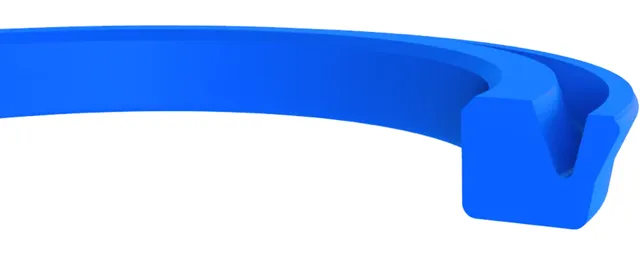
Pneumatic piston seals
Low-friction lip seals; single- and double-acting types.
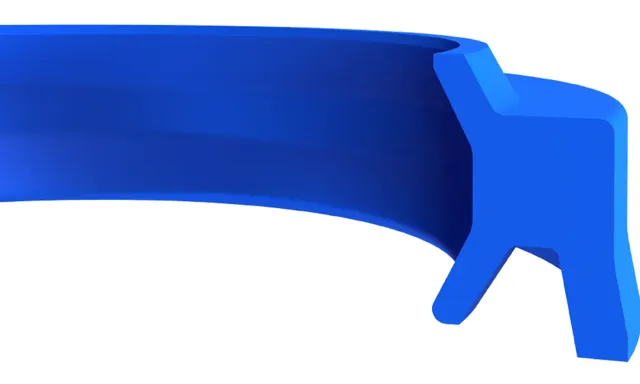
Pneumatic rod and wiper seals
Profiles that combine sealing and wiping in a single element.
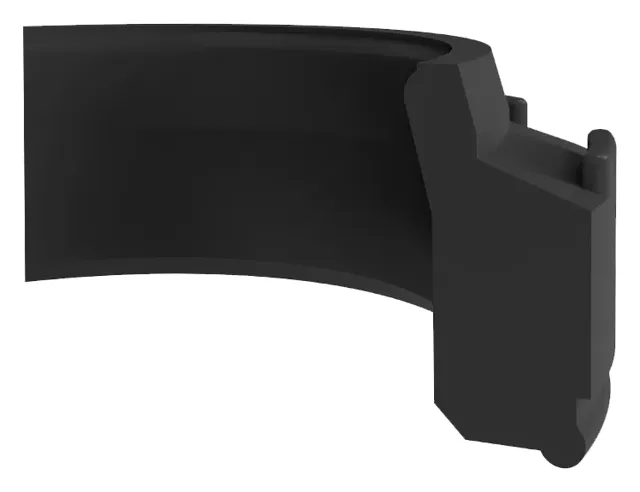
Cushioning seals
Seal the cushioning chamber at the end of the stroke.
Pneumatic cylinder seal kits
Ready-made kits for standard cylinders.
Product images: Kastaş.
How to select
In a pneumatic seal the priority is friction: high friction makes the cylinder move with stick-slip (jerkily) at low pressure. That is why thin-lipped, low-friction profiles are used and lubricated with a suitable grease at assembly.
In pneumatic cylinders built to ISO standards, seal kit dimensions are largely common; for non-standard cylinders we measure the seals one by one and find the equivalents. If a lubricator has been added later to a cylinder that ran on dry air, it should be kept in mind that the seals will have become used to that lubrication.
Replacing the seals returns most pneumatic cylinders to their original performance; instead of replacing a complete cylinder whose body and rod are sound, our service team renews it with a seal kit.
Kastaş profiles for each type
| Type | Kastaş profile | Where it is fitted |
|---|---|---|
| Pneumatic piston seal | K59, K54 | Piston |
| Pneumatic rod and wiper seal | K52 | Rod, in the cylinder head |
| Cushioning seal | K53 | Cushioning zone, cylinder head |
The profile-to-type matching is taken from Kastaş's own product pages. The size list of each profile is in our catalog.
Frequently asked questions
Why does my pneumatic cylinder stick and move jerkily?
It is mostly seal friction: dried grease, a worn seal or the wrong profile. Replacing the seal kit and lubricating with the right grease usually solves the problem.
Can a hydraulic seal be used in a pneumatic cylinder?
It is not recommended. Hydraulic seals are harder and have higher friction because they are made for high pressure; in a pneumatic cylinder they cause sticking and irregular movement.
Can you supply a pneumatic cylinder seal kit?
Yes. The brand and bore of the cylinder or the old seals are enough; we identify the ready-made kit for standard cylinders and the individual seals for others.
Can a pneumatic seal be used in a hydraulic cylinder?
No. Pneumatic seals are made for low pressure and low friction; under hydraulic pressure they are crushed and leak in a short time.
Why is my pneumatic cylinder slow or jerky?
Common causes are a worn piston seal, dried-out lubrication and incorrectly adjusted cushioning. Replacing the seal kit usually restores the cylinder to its former performance.
How do I find the seal kit for my pneumatic cylinder?
Sending the brand and bore of the cylinder or the old seals is enough; we prepare the suitable kit from Kastaş profiles.
Stock, sizes and part numbers
Sizes in stock, manufacturer part numbers and brands are kept up to date in our catalog. Send us your requirement on WhatsApp or by e-mail and we will quote and ship worldwide.