
Vacuum technology
Vacuum ejectors and pumps, flat and bellows suction cups, vacuum filters, vacuum switches and suction cup holders: holding and handling parts without clamping.
Vacuum gripping is a solution we use often in the automation circuits we design and build ourselves. We select the suction cup, vacuum source and filter together for the part to be handled, and calculate how many suction cups are needed from the weight and surface of the part.
Types
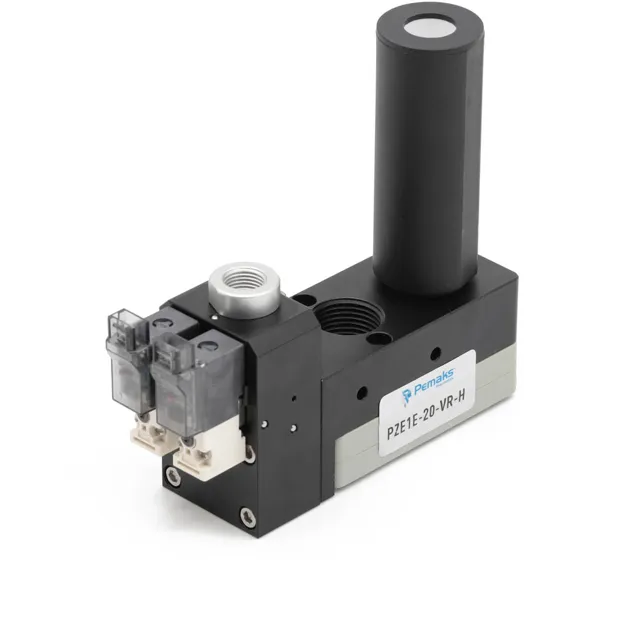
Vacuum ejectors
Generate vacuum from compressed air by the venturi effect and have no moving parts. Single stage and multi-stage types.
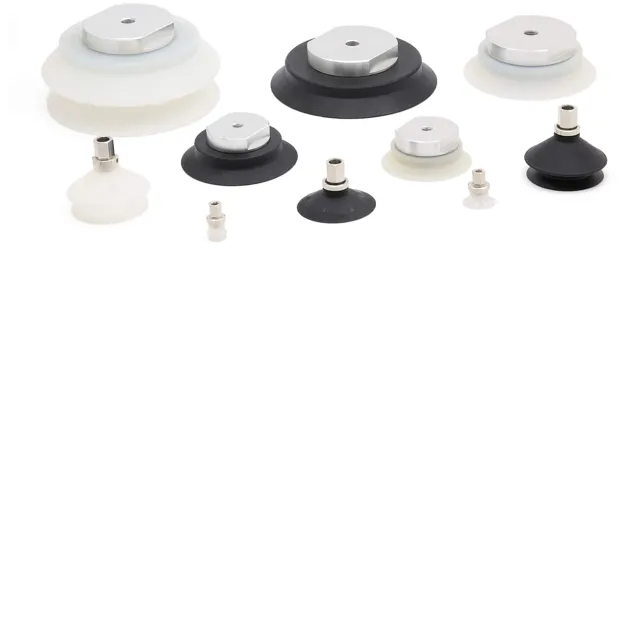
Suction cups
Flat (rigid, flat surfaces), bellows (inclined surfaces or varying height) and oval (long narrow parts) in NBR, silicone and polyurethane.
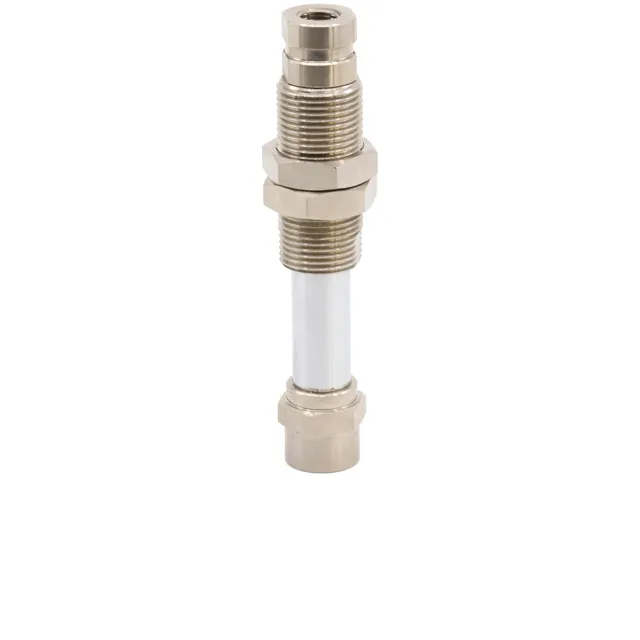
Suction cup holders
Spring-loaded level compensators: they seat the suction cup gently on parts of different heights.
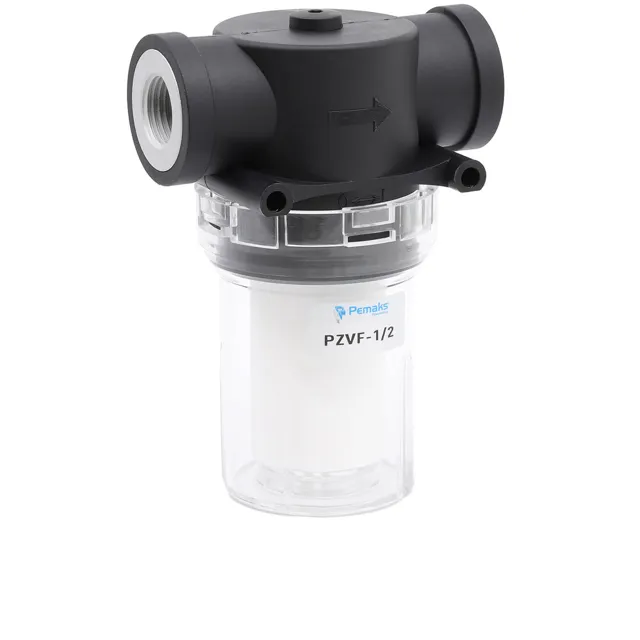
Vacuum filters
Trap the dust drawn in from the surface and prevent the ejector from clogging.

Vacuum switches and sensors
Monitor the vacuum level and signal the machine if the part is not held or the vacuum has dropped.
Vacuum pumps
An economical source on lines that need continuous, high-flow vacuum.
Product images: Pemaks.
How to select
Vacuum gripping is the way to lift a part without clamping it in jaws: materials with a smooth surface that are hard to grip, such as glass, sheet metal, wood panels, cardboard boxes and plastic sheet, are handled this way. The system consists of the source that generates the vacuum, the suction cup that transmits it to the part and the filter in between. A vacuum switch confirms that the part is really being held.
For cyclic pick and place tasks an ejector is usually the right choice: it reaches vacuum in under a second, needs no maintenance and consumes air only while it is working. On lines that run continuously and feed a large number of suction cups, a vacuum pump can be more economical.
The number of suction cups is calculated from the weight of the part, the cup diameter and the safety factor: typically a factor of two is used for horizontal lifting and a factor of four for vertical holding. As for material, NBR is general purpose and suits oily sheet metal, silicone is for food applications, and polyurethane is long-lasting on sheet metal with sharp edges.
The filter must not be left out: the channel of an ejector without a filter clogs with dust and the vacuum weakens silently. When a vacuum system weakens, our service team first checks the filter, the suction cup lip and the air line.
Holding force by suction cup diameter (−0.6 bar vacuum)
| Suction cup diameter | Theoretical holding force | Safe load, horizontal lifting | Safe load, vertical lifting |
|---|---|---|---|
| Ø10 mm | 4.7 N | 0.24 kg | 0.12 kg |
| Ø20 mm | 18.8 N | 0.96 kg | 0.48 kg |
| Ø30 mm | 42.4 N | 2.16 kg | 1.08 kg |
| Ø40 mm | 75.4 N | 3.84 kg | 1.92 kg |
| Ø50 mm | 117.8 N | 6.00 kg | 3.00 kg |
| Ø60 mm | 169.6 N | 8.65 kg | 4.32 kg |
| Ø80 mm | 301.6 N | 15.37 kg | 7.69 kg |
| Ø100 mm | 471.2 N | 24.02 kg | 12.01 kg |
Calculation: force = vacuum × suction cup area; −0.6 bar = 0.06 N/mm². For the safe load, a safety factor of 2 was used for horizontal lifting and 4 for vertical lifting (holding from the side). Holding force drops on porous or oily surfaces and with fast movement. If more than one suction cup is used, the load is divided by the number of cups.
Frequently asked questions
Should I buy a vacuum ejector or a vacuum pump?
An ejector if it is a cyclic pick and place task. It has no moving parts, needs no maintenance, reaches vacuum in under a second and is inexpensive. In return it consumes air for as long as it runs. If vacuum is needed continuously and for long periods, the energy cost of a mechanical pump is lower.
How many suction cups do I need, and how do I calculate it?
Divide the part weight by the holding force per suction cup, then multiply by the safety factor. The typical factor is 2 for horizontal lifting and 4 for vertical holding. The force per cup is the cup area multiplied by the vacuum level reached, and the manufacturer table gives this value. On a rough or porous surface the actual force is below the table value.
Flat or bellows suction cup?
A flat cup if the surface is rigid and flat: it gives the highest force and the least part sway. A bellows cup if the surface is inclined, curved or of varying height: its collapsible body takes up the difference. Because a bellows cup lifts the part slightly as it collapses, it is also preferred for removing parts from a mold.
How do I choose the suction cup material?
NBR is general purpose and works well on oily sheet metal. Silicone is for food and clean room applications but can leave marks on some painted surfaces. Polyurethane is the most wear resistant and gives the longest life on sharp-edged sheet metal and abrasive surfaces.
Is a vacuum filter really necessary?
Yes, and leaving it out is the most common mistake. The air drawn in also pulls in the dust on the surface of the part. As the venturi channel of the ejector narrows, the vacuum weakens silently and parts start to drop. The symptom is gradual, not sudden, which is why it is noticed late.
Stock, sizes and part numbers
Sizes in stock, manufacturer part numbers and brands are kept up to date in our catalog. Send us your requirement on WhatsApp or by e-mail and we will quote and ship worldwide.