
Air preparation units (FRL)
Filters, micro and activated carbon filters, regulators, lubricators, shut-off and soft-start valves: the units that prepare compressed air for the circuit.
A significant share of pneumatic faults start not in the valve or the cylinder but in the air. That is why air preparation is the first place we look when building a circuit or carrying out maintenance. As a Pemaks distributor we supply air preparation units, spare bowls and elements, and lubricator oil from stock.
Types
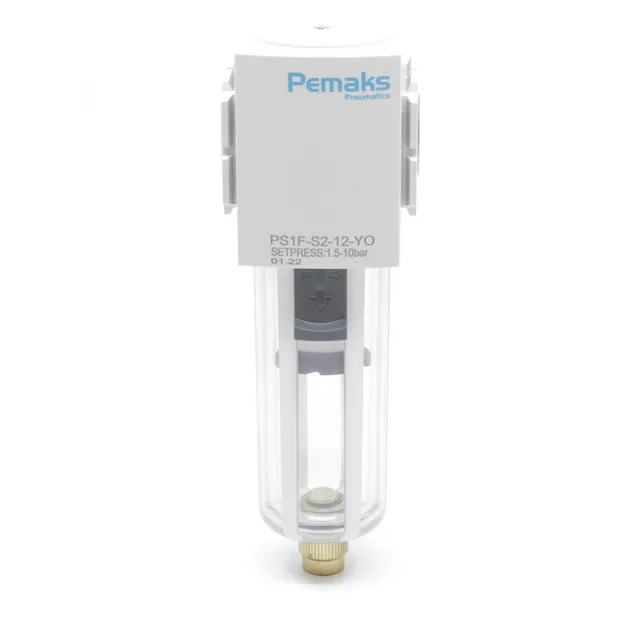
Filters
Trap water droplets and particles. The collected water is removed by manual or automatic drain.
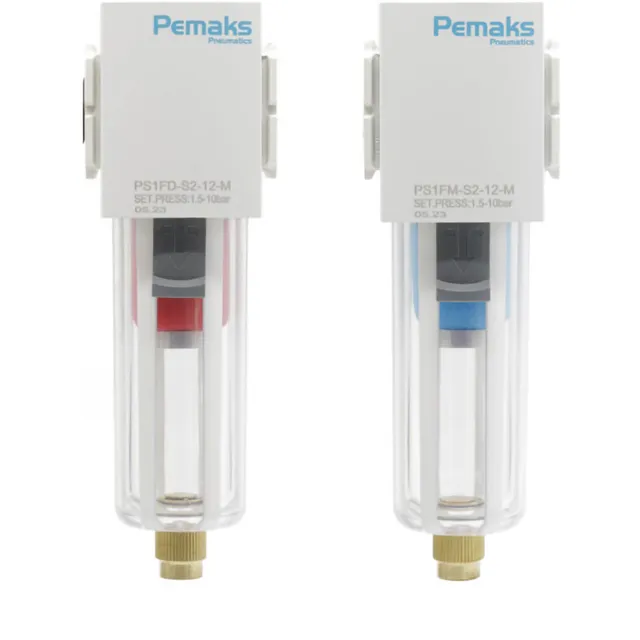
Micro and activated carbon filters
Trap very fine particles, oil vapor and odor. For food, packaging, paint and sensitive instrument applications.
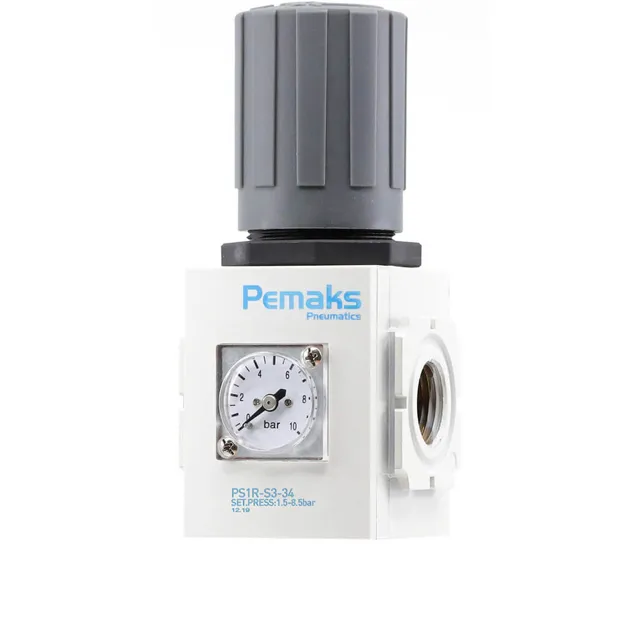
Regulators
Reduce the fluctuating mains pressure to the constant value the circuit needs. Precision regulators for sensitive work.
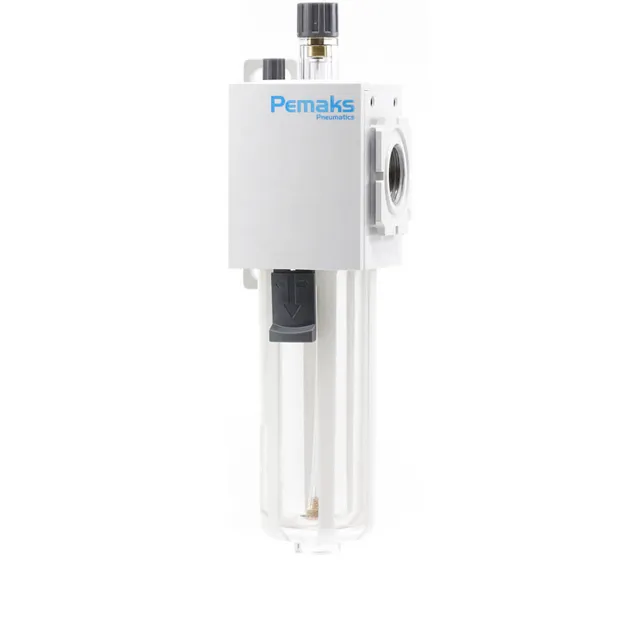
Lubricators
Add a controlled amount of oil mist to the air. For older type cylinders and air tools that need lubrication.
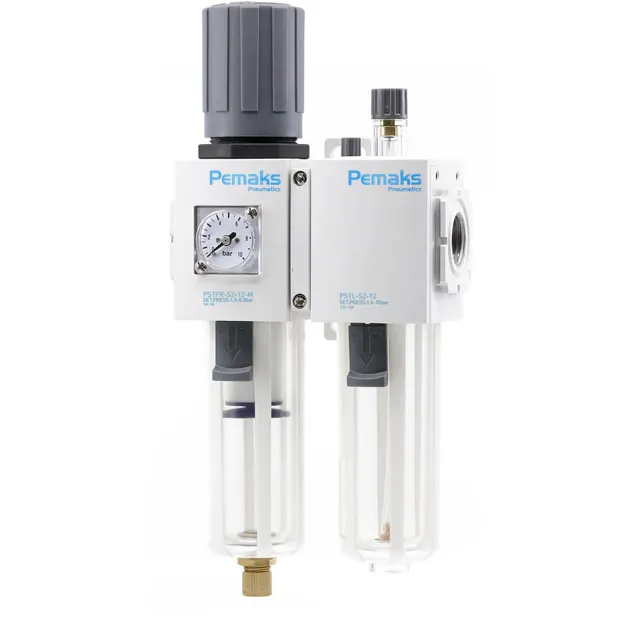
Filter regulators (FR) and FRL sets
Filter, regulator and lubricator assembled together in a single body or as a modular set.
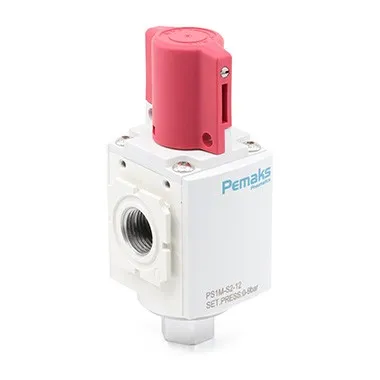
Shut-off valves
Cut off the air at the inlet of the circuit and exhaust the line. Lockable types provide occupational safety during maintenance.
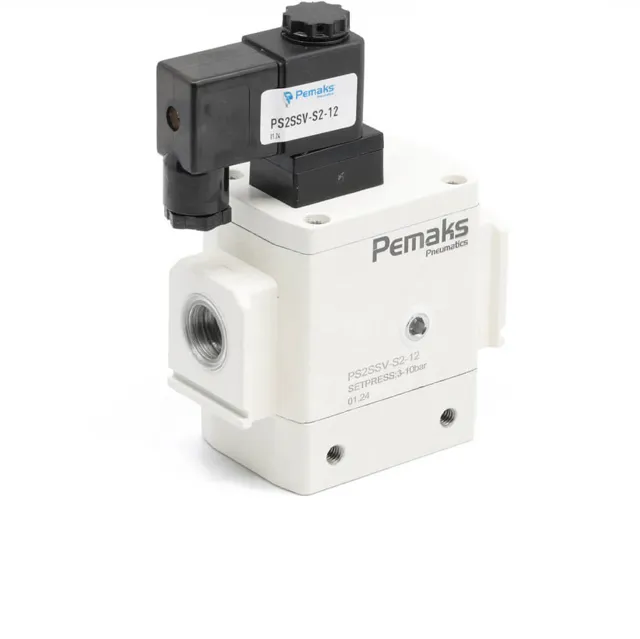
Soft-start valves
Feed air to the circuit gradually. They prevent sudden, uncontrolled cylinder movement at first pressurization.
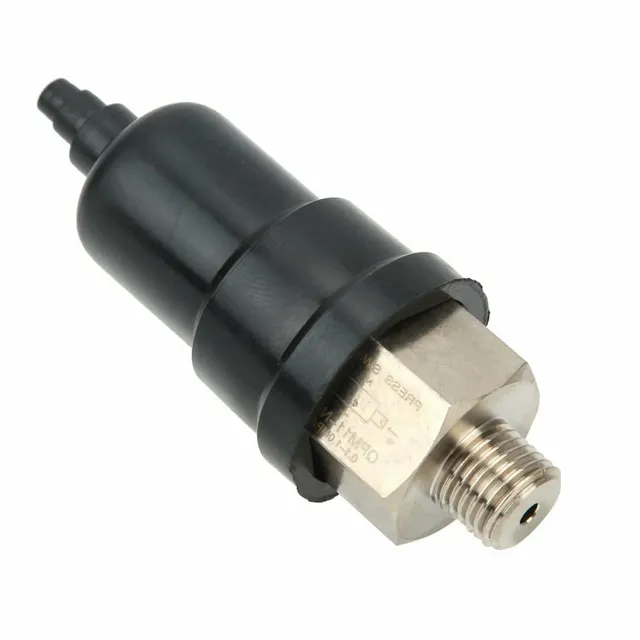
Pressure switches and pressure gauges
Display and monitor the line pressure and give the signal that stops the machine when pressure drops.
Product images: Pemaks.
How to select
Air leaving the compressor carries water, oil vapor and particles. If it is fed to the circuit without cleaning, valve spools rust, cylinder seals wear and silencers clog. Air preparation does this job at the inlet of the circuit. Correctly selected, it directly extends valve and cylinder life.
Not every stage is needed in every circuit. The filter and regulator pair is the most common setup. Most modern cylinders are lubricated for life and so run without a lubricator. Once lubrication has been started it must not be stopped, because the oil washes out the factory grease. When we take over an existing line we ask about this history first and make our recommendation accordingly. If the product the air touches is food, packaging or paint, micro and activated carbon filters are added.
The size of the unit is selected according to the flow rate of the line. A unit smaller than the line creates a pressure drop and slows the cylinders down. In environments with solvent vapor, a metal bowl type is used instead of a plastic bowl. Adding a shut-off and soft-start valve at the inlet of the unit provides safety during maintenance and a smooth machine start at first pressurization.
Leaks in the air line mean the compressor is running for nothing. As part of predictive maintenance, our service team detects leaks by the ultrasonic method and reports on the condition of the air preparation at the same time.
Compressed air quality classes (ISO 8573-1)
| Class | Solid particles, 1-5 µm (count/m³) | Pressure dew point | Total oil (mg/m³) |
|---|---|---|---|
| 1 | ≤ 10 | ≤ −70 °C | ≤ 0.01 |
| 2 | ≤ 100 | ≤ −40 °C | ≤ 0.1 |
| 3 | ≤ 1,000 | ≤ −20 °C | ≤ 1 |
| 4 | ≤ 10,000 | ≤ +3 °C | ≤ 5 |
| 5 | ≤ 100,000 | ≤ +7 °C | - |
| 6 | - | ≤ +10 °C | - |
Air quality is written with three numbers: particle, water and oil class. For example, ISO 8573-1 [1:4:2] means class 1 for particles, class 4 for water and class 2 for oil. For class 1 the standard also defines limits for smaller particles. The table gives the 1-5 µm column, which is the one most often consulted.
Frequently asked questions
Should I buy a two-piece (FR) or three-piece (FRL) air preparation unit?
The two-piece setup (filter + regulator) is the standard choice today. Most modern pneumatic cylinders and valves are lubricated for life and do not need oil. The three-piece setup (filter + regulator + lubricator) is needed for older type cylinders, high-cycle machines and impact air tools.
Can I stop using a lubricator once I have started?
It should not be stopped. Over time, the oil in the air washes out the permanent grease applied to the components at the factory. If lubrication is cut off, the surfaces run dry and wear accelerates. Once a circuit has started running lubricated, it should stay lubricated for its whole life.
How do I size an air preparation unit?
The port size is selected according to the line diameter and the air flow consumed. Choosing a unit smaller than the line is the most common mistake: the unit acts as a restriction, pressure drops and the cylinders run slower than expected. When in doubt, it is safe to go one size larger.
Water keeps collecting in the filter bowl. Is this normal?
Yes, that is the job of the filter: the moisture in the air compressed by the compressor condenses as it cools. What matters is that this water is drained. Bowls with a manual drain should be emptied by hand at the start of the shift, and where there is a risk of forgetting, an automatic drain type should be chosen. When the bowl overflows, water gets into the circuit.
What should I do if the regulator does not hold the set pressure?
Please check the inlet pressure first: a regulator cannot produce an outlet value higher than the inlet pressure, and the difference between them needs to be at least 1 bar. If the inlet is sufficient, the regulator diaphragm may be torn or the spring seat may be contaminated. If the adjusting knob is not locked after setting, it turns by itself with vibration and the pressure drifts.
Can you find the problem in my air line by measurement?
Yes. As part of predictive maintenance, our service team detects air leaks by the ultrasonic method, and assesses and reports on the air preparation unit, pressure and line condition together.
Stock, sizes and part numbers
Sizes in stock, manufacturer part numbers and brands are kept up to date in our catalog. Send us your requirement on WhatsApp or by e-mail and we will quote and ship worldwide.
Air preparation units (FRL) in the catalog Online store (Turkish) →