
Pneumatic valves
Directional control, flow (speed) control, pressure control, check, logic and shut-off valves: solenoid, air pilot, mechanically and manually operated types, valve terminals.
A valve is any component that controls the fluid: valves determine the direction, quantity and pressure of the air and when it flows. As a Pemaks distributor we supply pneumatic valves from stock and select the type and actuation that suit the circuit together with you. Finding an equivalent for a discontinued valve, or reading and rebuilding the circuit of an existing machine, is work we do often.
Types
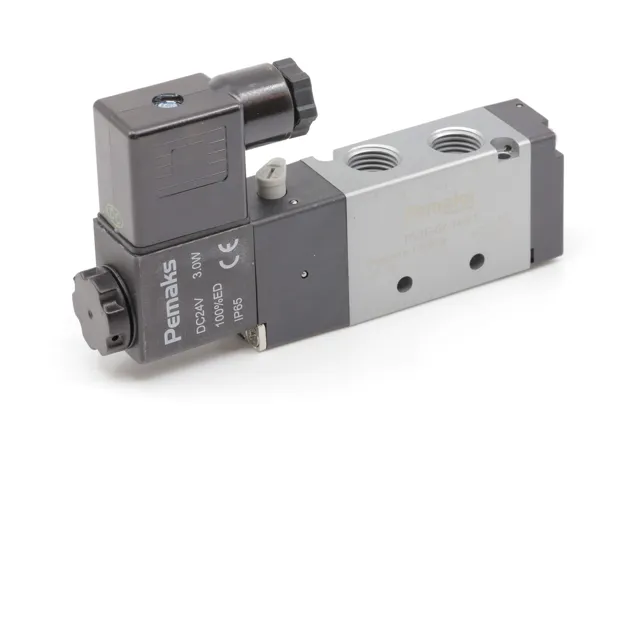
Directional control valves
Determine which line the air goes to: 2/2, 3/2, 5/2 and 5/3 types. These valves make the cylinder extend, retract or stop.
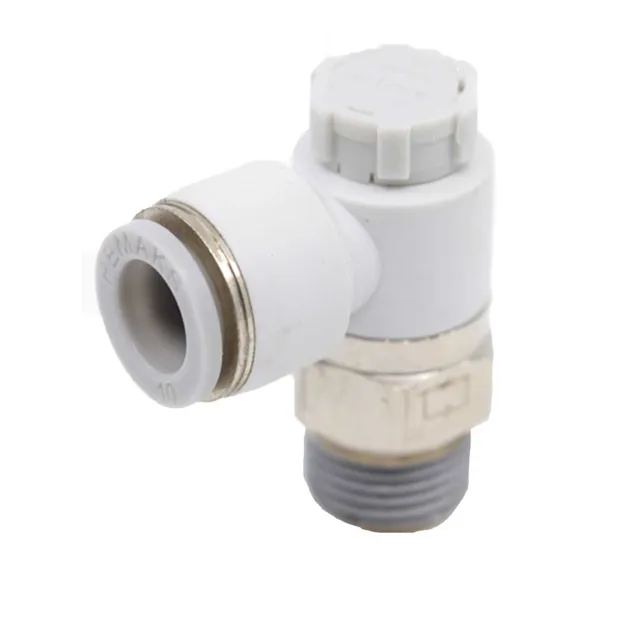
Flow control (speed control) valves
Set the cylinder speed by throttling the air in one direction. Mostly the fitting type that mounts directly in the cylinder port.
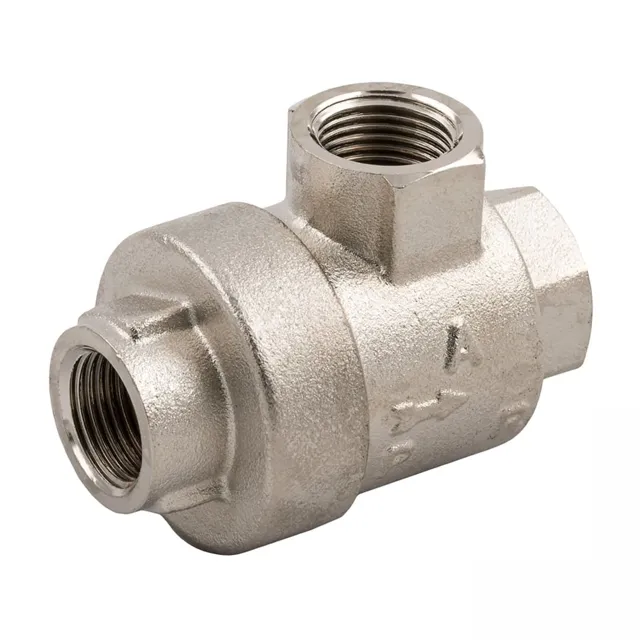
Quick exhaust valve
Vents the air in the cylinder directly to atmosphere without sending it back to the valve. Increases cylinder speed.
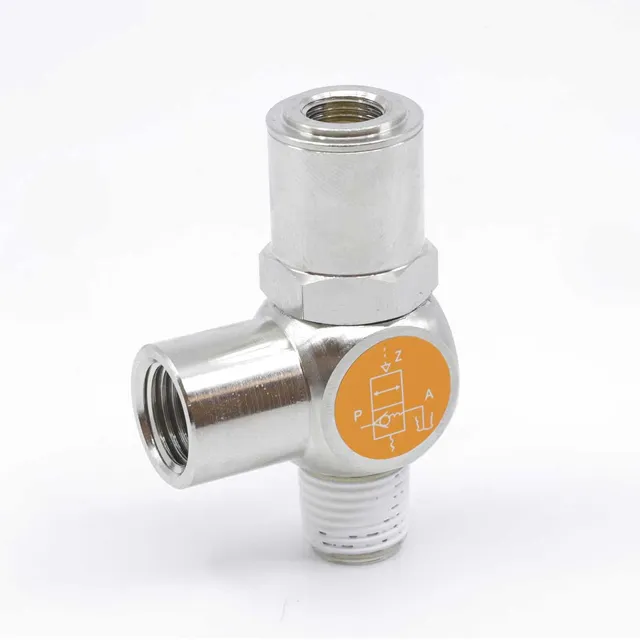
Check valves
Allow air to pass in one direction only. A pilot operated check valve holds the cylinder in position until a signal arrives.
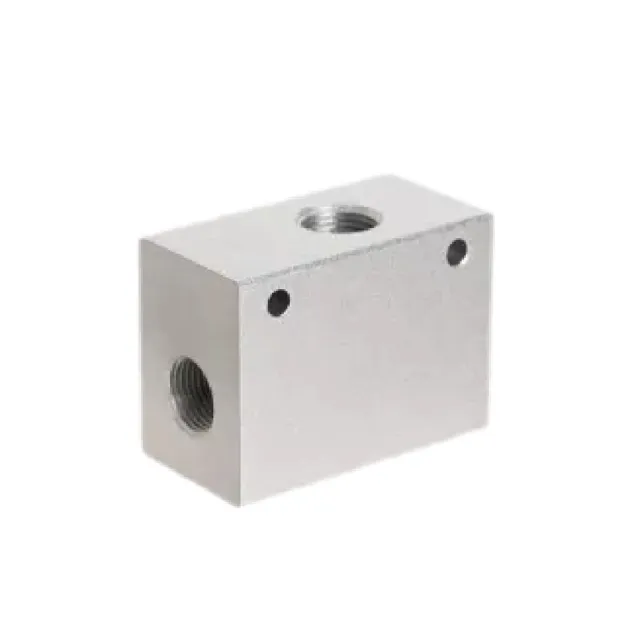
Logic valves
AND (dual pressure) and OR (shuttle) valves combine two signals, for example on presses operated with two-hand control.
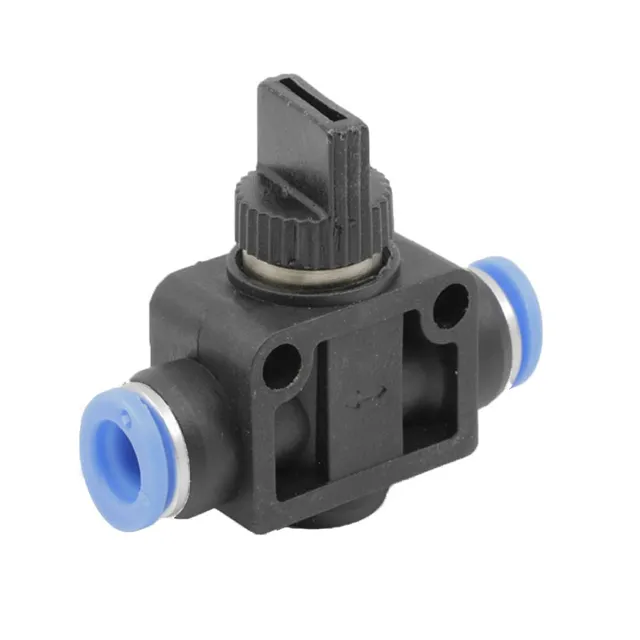
Shut-off valves
Ball valves and lockable 3/2 shut-off valves. The air of the circuit is safely isolated and exhausted during maintenance.
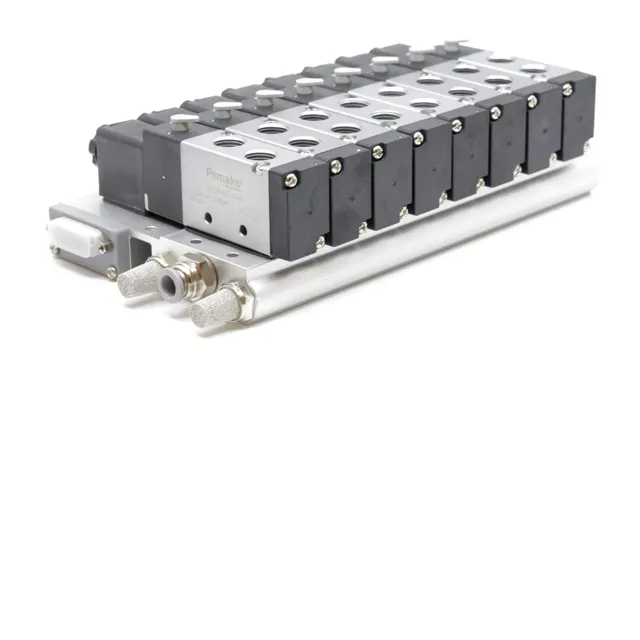
Valve terminals and manifolds
Combine a large number of valves in one block with common air supply and exhaust. Installation, wiring and maintenance become easier.
Pressure control valves
A relief (safety) valve vents excess pressure, and a sequence valve starts the next movement when a set pressure is reached. Regulators are in the air preparation group.
Product images: Pemaks.
How to select
Selection starts with the job of the valve: will it change the direction of the air, set its speed, limit its pressure or shut off the line? In directional control valves the two numbers in the designation are the number of ports and positions. A 5/2 valve drives a double acting cylinder back and forth, a 3/2 valve is used with single acting cylinders and for air shut-off, and a 5/3 valve has a third position in the center. The table shows what each type means and what happens when power is lost.
How the valve is actuated is also part of the selection: solenoid (electrically), air pilot operated (by air, where electricity is not wanted or in explosion risk areas), mechanical (roller and plunger types, for position sensing) or manual (lever, push button, pedal).
The actuation type is selected according to the structure of the circuit. In automation the solenoid valve is connected to a PLC. Air pilot operated valves are used where electricity is not wanted or there is a risk of explosion, roller or plunger operated mechanical valves where the machine itself senses the position, and lever, push button and pedal operated valves in simple circuits used directly by the operator.
The safety choice is made separately. A single solenoid valve returns to its start position by spring when power is lost, and a double solenoid valve stays in its last position. A 5/3 closed center valve locks the cylinder where it is. If a load is suspended on the rod, these differences decide whether the part will drop in a power failure. On jobs where we build the circuit together, we make these choices according to the safety requirement of the machine.
The speed of a cylinder is set not by its bore but by the flow rate of the valve and the connecting components. On a slow cylinder we first check the valve size, the flow control valve, the flow capacity of the fittings and the tubing cross-section. In most cases the problem is solved without buying a larger valve. Process solenoid valves used for media such as water, steam and nitrogen are in the process equipment group.
What the designation of a directional control valve means
| Designation | Ports | Positions | What it drives | On loss of power |
|---|---|---|---|---|
| 3/2 NC | 3 | 2 | Single acting cylinder, air shut-off | Spring returns the valve, outlet exhausts |
| 5/2 single solenoid | 5 | 2 | Double acting cylinder | Spring returns it to the start position |
| 5/2 double solenoid | 5 | 2 | Double acting cylinder | Stays in the last position (memory) |
| 5/3 closed center | 5 | 3 | Double acting, stopping in mid-position | Cylinder is locked where it is |
| 5/3 open center | 5 | 3 | Double acting, stopping in mid-position | Cylinder is free and can be pushed by hand |
The first number is the number of ports and the second is the number of positions. The last column is the real deciding factor when designing the circuit and is rarely stated in catalogs: the valve type determines what the cylinder does when power is lost or at an emergency stop. If a load remains suspended, choosing a double solenoid or closed center valve is a safety decision.
Frequently asked questions
What is the difference between a 5/2 and a 3/2 valve?
A 5/2 valve has five ports and drives a double acting cylinder in both directions: while one line is pressurized, the other opens to exhaust. A 3/2 valve has three ports and drives single acting cylinders or opens and closes a line. If you have a double acting cylinder, you need a 5/2.
Should I buy a single solenoid or a double solenoid valve?
This is a safety decision. A single solenoid valve returns to its start position by spring when power is lost, and the cylinder retracts by itself. A double solenoid valve stays in its last position. If a load is suspended on the rod, or the part must stay clamped when power is lost, a double solenoid is required.
What is the difference between a 5/3 closed center and open center valve?
With a closed center, both lines are closed in the mid-position and the cylinder is locked where it is. It is used for stopping in an intermediate position. With an open center, the lines open to exhaust, the cylinder is free and can be moved by hand. This is what is wanted during setup and adjustment.
My cylinder is slow. Should I buy a larger valve?
It has to be measured first. Speed is set by the flow rate, and flow is restricted by the valve, fitting and tubing together. In most cases the bottleneck is thin tubing or a small fitting. A larger valve can cost money without solving the problem. Speed follows whichever cross-section is smallest along the line.
When do I need a valve manifold?
When several valves are used side by side. Because the air inlet is common, there is no need to run a separate supply to each valve. The installation is tidy, there are fewer leak points and valves can be removed one by one for maintenance.
What can I fit in place of a discontinued valve?
Please send a photo of the label on the valve, its port sizes and the coil voltage. We match the number of ports and positions, the port thread and the coil, and recommend an equivalent from stock. If needed, we also prepare the thread adapters with it.
Do you diagnose valve faults on site?
Yes. Our service team checks the valve, coil and air line together on site. Air leak detection is also one of the predictive maintenance measurements we carry out.
When is an air pilot operated valve preferred?
These are valves whose control signal is air, not electricity. They are preferred where electricity is not wanted, in wet or explosion risk environments, and in circuits built entirely with pneumatics.
What does a quick exhaust valve do?
It vents the air in the cylinder to atmosphere right next to the cylinder, without sending it back to the valve. It noticeably increases speed on cylinders driven through long tubing or that need a fast return.
Stock, sizes and part numbers
Sizes in stock, manufacturer part numbers and brands are kept up to date in our catalog. Send us your requirement on WhatsApp or by e-mail and we will quote and ship worldwide.