
Solenoid valves
Electrically operated valves for air, water, gas and steam: direct acting, pilot operated and assisted lift; normally closed (NC) and normally open (NO).
On small and medium size lines a solenoid valve is the simplest way to switch flow electrically; if the wrong type is selected, the valve either fails to open or leaks when closed. We assess the fluid, the pressure and the pressure differential in the line and select the right solenoid type together with the body and seal material. We ship solenoid valves from stock across Türkiye and abroad, and also sell them through hidroticaret.com, our online store (Turkish).
Types
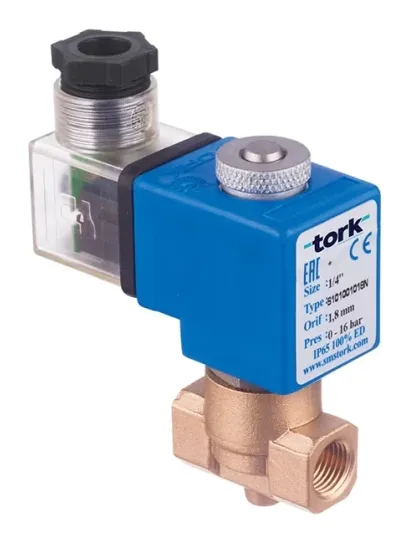
Direct acting solenoid valves
The coil lifts the seal directly; opens even without a pressure differential. Used on small lines and at low flow.
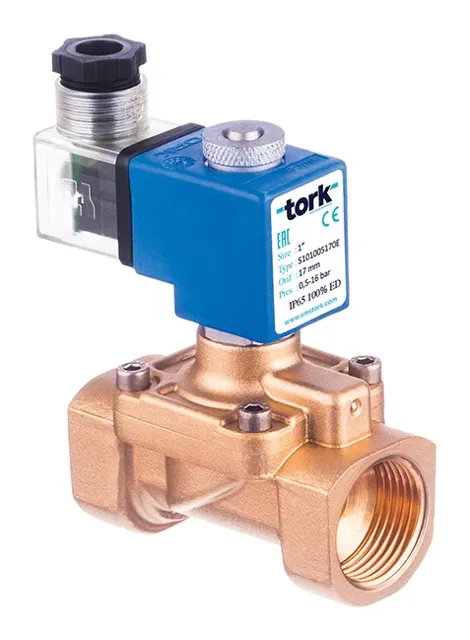
Pilot operated solenoid valves
The coil opens a small pilot orifice and the main seal is lifted by the pressure of the fluid itself. A small coil is enough for high flow, but a pressure differential is required to open.
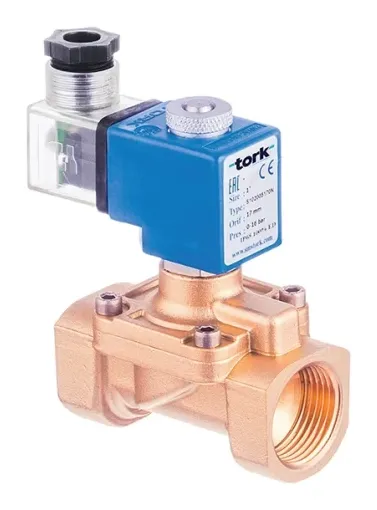
Assisted lift solenoid valves
In addition to the pilot design, the seal is also lifted mechanically; opens at zero pressure differential as well.
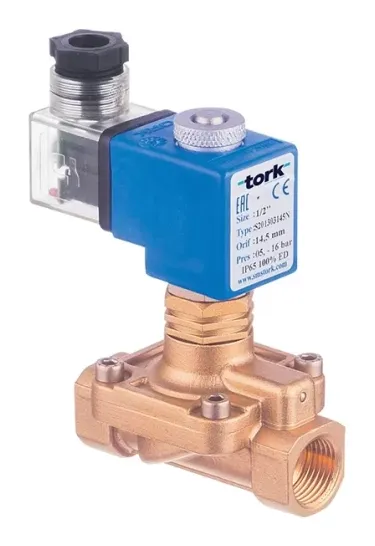
Steam and hot water solenoid valves
With seal and body resistant to high temperature; a separate class for steam lines.
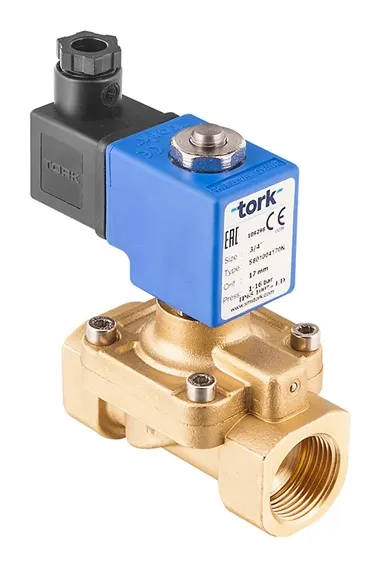
Gas solenoid valves
Safety shut-off valve on natural gas and LPG lines; closes when power fails.
Product images: hidroticaret.com and manufacturers.
How to select
The first question is what the valve should do without power. A normally closed (NC) valve closes when power is lost; most applications and all safety shut-off duties use this type. A normally open (NO) valve opens when power is lost and is selected for lines that must stay open most of the time, so that the coil is not energized needlessly.
The second question is the pressure differential in the line. A pilot operated valve needs a pressure differential between inlet and outlet to open; it may not open on low pressure, tank outlet or recirculation lines. On these lines a direct acting or assisted lift valve is selected. The table below compares the three types.
The seal material is selected according to the fluid and temperature: NBR for water and air, EPDM or PTFE for hot water and steam, FKM for oil and fuel. The coil voltage is selected to match the control voltage.
Comparison of solenoid valve types
| Type | Opens without pressure differential | Flow | Typical use |
|---|---|---|---|
| Direct acting | Yes | Low | Small lines, low pressure, vacuum |
| Pilot operated | No, requires a pressure differential | High | Mains pressure water, compressed air |
| Assisted lift | Yes | Medium to high | Tank outlet, recirculation, lines with variable pressure |
The minimum pressure differential a pilot operated valve needs to open is stated on the valve nameplate and in the manufacturer's catalog.
Frequently asked questions
What is the difference between NC and NO solenoid valves?
An NC valve is closed without power and opens when energized; an NO valve works the other way round. NC is used for safety shut-off duties.
Why is my solenoid valve not opening?
A pilot operated valve does not open without sufficient pressure differential. Wrong coil voltage, a burnt coil and a pilot orifice blocked with dirt are also common causes.
Why does my solenoid valve leak when closed?
Dirt may have got under the seal, the seal may be worn, or the valve may be installed in the reverse direction. The arrow on the valve body shows the flow direction.
Which solenoid valve is used for steam?
Only a valve made for steam, with seal and body resistant to high temperature. A valve made for water fails quickly on steam.
How is the coil voltage selected?
Same as the control circuit voltage: 24 V DC, 24 V AC or 220 V AC. Voltage and current type are not interchangeable.
Stock, sizes and part numbers
We select and supply the products in this group according to the application. Send us your requirement, the size and the operating conditions on WhatsApp and we will recommend the right product.